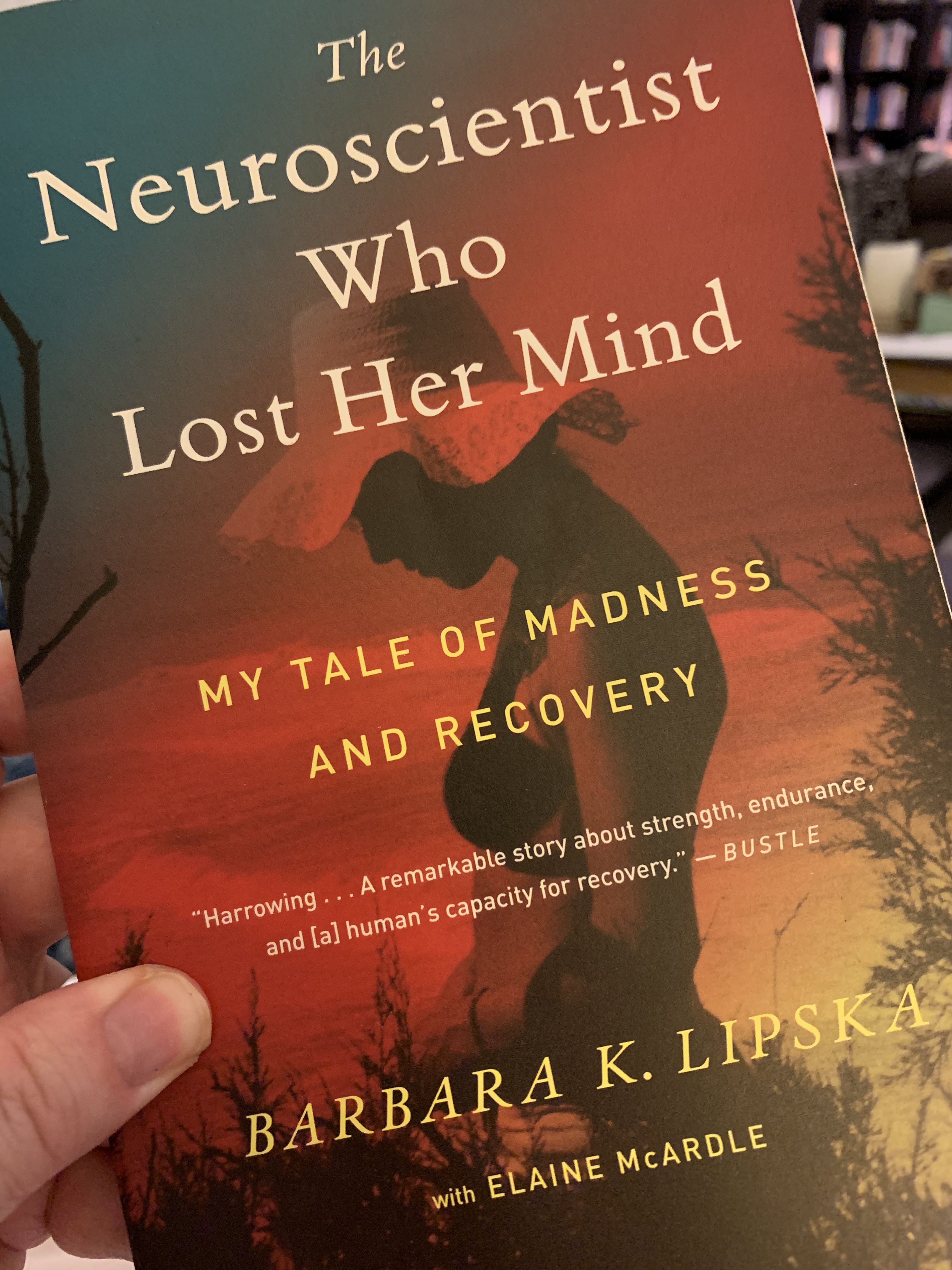
Comment on “The Neuroscientist Who Lost Her Mind”

1BA66F95-8DC1-4669-B205-CA33D690FB15

This was a fast read for me, partly because I’m 1/16 neurosurgeon after living with my mother’s brain cancer, and partly because I’ve been researching my own situation. Lipska does an excellent job in weaving her story in with the science behind it all.

I recommend it to anyone who wants to understand how symptoms can mimic Alzheimer’s but be their own different brand of dementia. In Lipska’s case the cause is tumors, treatment for them, and delays in treatment as delayed by her behavior, which I shared, of insisting as much as possible that she was fine.

I related to many of her experiences and the book made me feel less alone.

Someone told me several months ago that they had not invited me to an event because it seemed so likely that I would be dead by the time the event came around. That raw honesty is why I keep digging for answers.
Knowing You’re Losing Your Mind

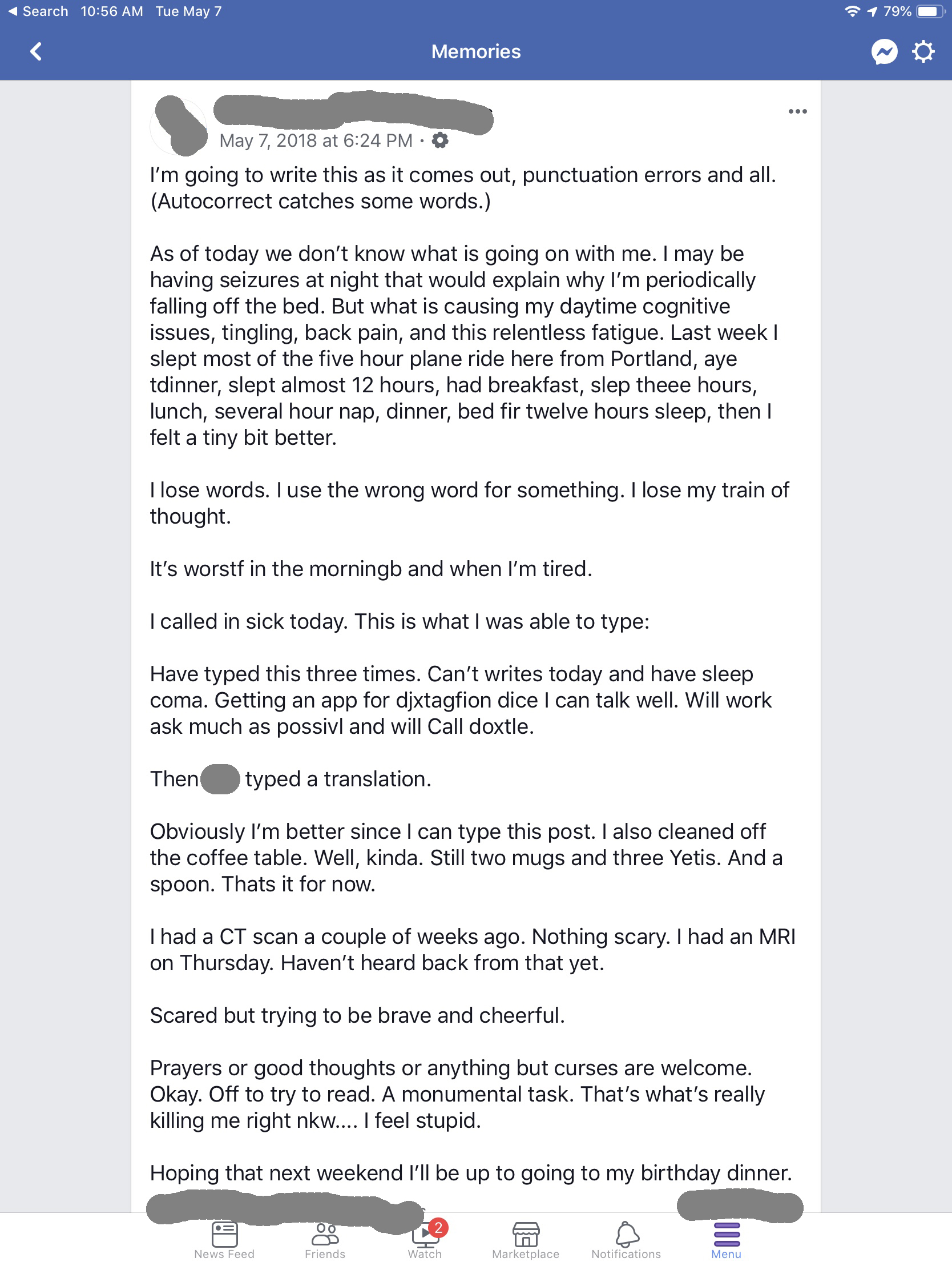
While this story begins long ago, today’s Facebook Memories brought this up and it feels like a sign to post it here today as a starting point. More history will be shared in chronological order.

Although I do not claim to fully understand the experience of development of dementia, this is pretty close to it according to my neurologist and my research. My neurologist said I had “functional dementia” for an undefined period of time.

However, a key test in determining a case of dementia is the shrinking of the prefrontal cortex, and mine looked fine. An MRI done in early 2018 showed no abnormalities except for a slightly deviated septum and some compression of cervical vertebrae. That compression, I have been told a dozen times, could not have caused any of my cognitive or odd physical symptoms. (This is something I’ll challenge in a later post.)

The screenshot below demonstrates clearly my state of mind and body a year ago.

Redacted FB Memory - 05.07.2018

If you enjoyed this post, please bookmark the blog. I will be posting regularly.